
Why Janoshik Analytical: A Researcher's Guide to Independent Lab Verification
Independent third-party verification is the only credible way to certify what's actually in a research-grade peptide vial. Here's why Janoshik is the European reference, and what their COA actually tells you.
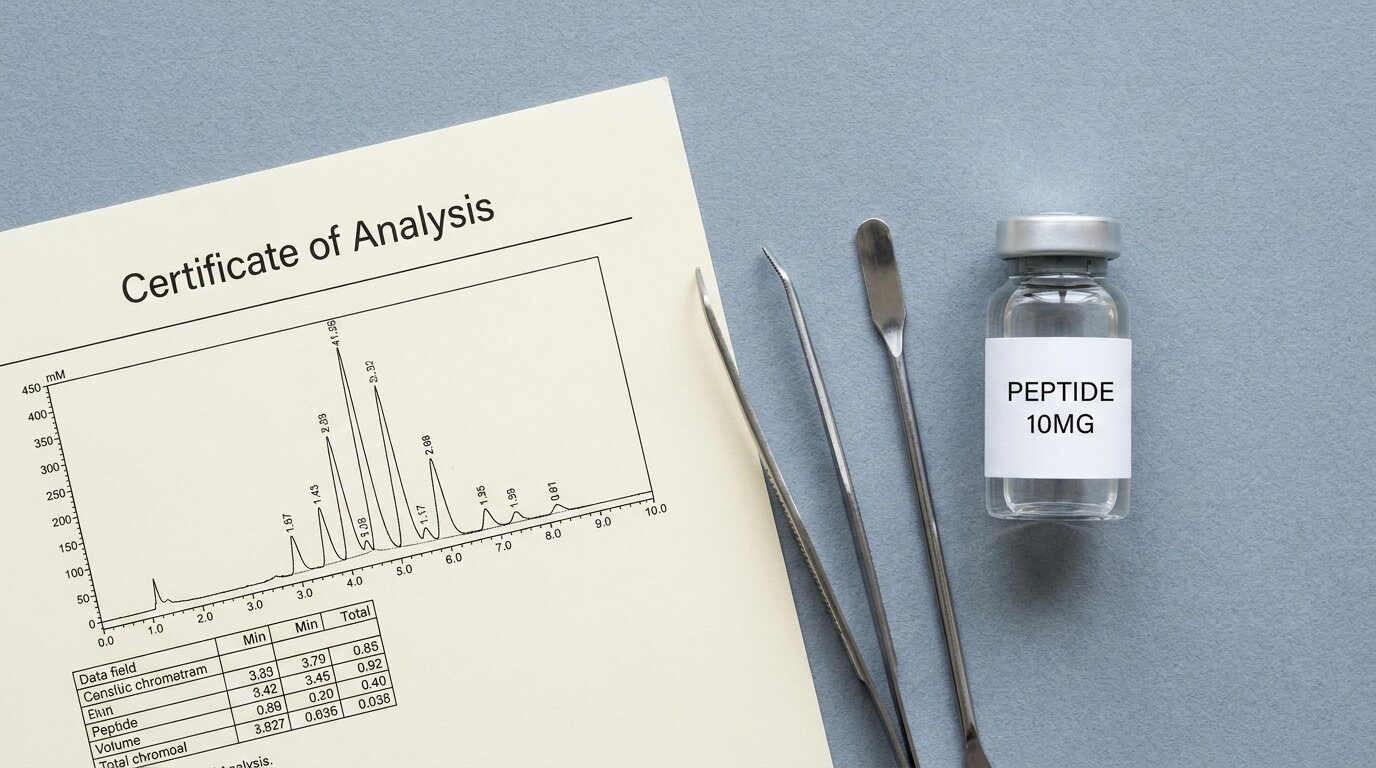
The phrase 'lab tested' on a research-peptide product page means almost nothing on its own. Tested by whom? Against what reference standard? To what published method? Without those answers, the claim is decoration, and decoration is exactly what an unverified vial offers.
Independent third-party verification, by an accredited analytical lab the manufacturer does not control, is the only credible way to certify what is in a research-grade vial. For European labs, contract research organizations, and independent investigators, that lab is overwhelmingly Janoshik Analytical.
What 'third-party' actually requires
A first-party COA is a document the manufacturer produces about its own product, on its own equipment, by its own staff. Structurally, it is a self-report. A third-party COA is one where the manufacturer ships the lot to an analytical lab it does not own, the lab runs validated assays, and the lab, not the manufacturer, issues the report.
The structural separation matters because it removes the incentive to optimize the result. Janoshik gets paid to measure what is there, not to confirm what someone hopes is there. For research applications where the vial contents become an experimental variable, that distinction is not optional.
The four measurements on a complete COA
A complete Janoshik COA covers four core measurements: HPLC purity, identity by mass spectrometry, a residual-solvent screen, and a bacterial endotoxin assay. Each maps to a different failure mode, and together they answer different questions about the same powder.
Reversed-phase HPLC is the standard method for quantifying peptide purity, and mass spectrometry is what confirms identity by matching the measured mass to the theoretical mass from the sequence. A 2023 paper in Pharmaceutical Research from authors affiliated with the US Pharmacopeia lays out exactly this pairing: HPLC to measure peptide content and related impurities, mass spectrometry to confirm the sequence is the sequence. HPLC tells you how much of the powder is the molecule; mass spec tells you whether it is the right molecule. Our lots carry a typical HPLC purity floor of 99% or higher.
The residual-solvent screen reports what survived from manufacturing, measured against established limits such as the ICH Q3C and USP residual-solvent standards. The endotoxin assay determines whether a lot is suitable for a given protocol class. The Limulus amebocyte lysate (LAL) test is the standard here: a 2021 review in Biomedicines describes it as the most sensitive and most widely adopted method for detecting bacterial endotoxin in injectable products, and it has been the regulatory reference since the 1970s.
Lot-level, not batch-average, reporting
Janoshik COAs are issued per-lot, not per-batch-average. The lot number printed on the vial label corresponds exactly to the lot that was tested. There is no representative sample standing in for the rest, and no rolling average across recent production. The vial in your hand is the vial that was measured.
For research designs where lot-to-lot consistency matters, and for any longitudinal study it always matters, that per-lot traceability is what makes a purity figure mean anything. A figure that applies to 'a recent batch' tells you nothing about the specific vial you reconstituted. A figure tied to the printed lot number does.
Why verification sits upstream of everything
Every downstream number a study produces inherits the uncertainty of the vial it started from. If the identity is unconfirmed, the cleanest protocol in the world is measuring an unknown. Third-party verification is not paperwork for its own sake. It is the step that lets the contents of the vial work as a controlled variable instead of an assumption, which is why it belongs at the top of the chain rather than the end of it.
This article describes mechanisms and applications studied in research models. NZM peptides are sold strictly for in vitro and animal research. They are not for human consumption, off-label use, or clinical application.
From the desk.
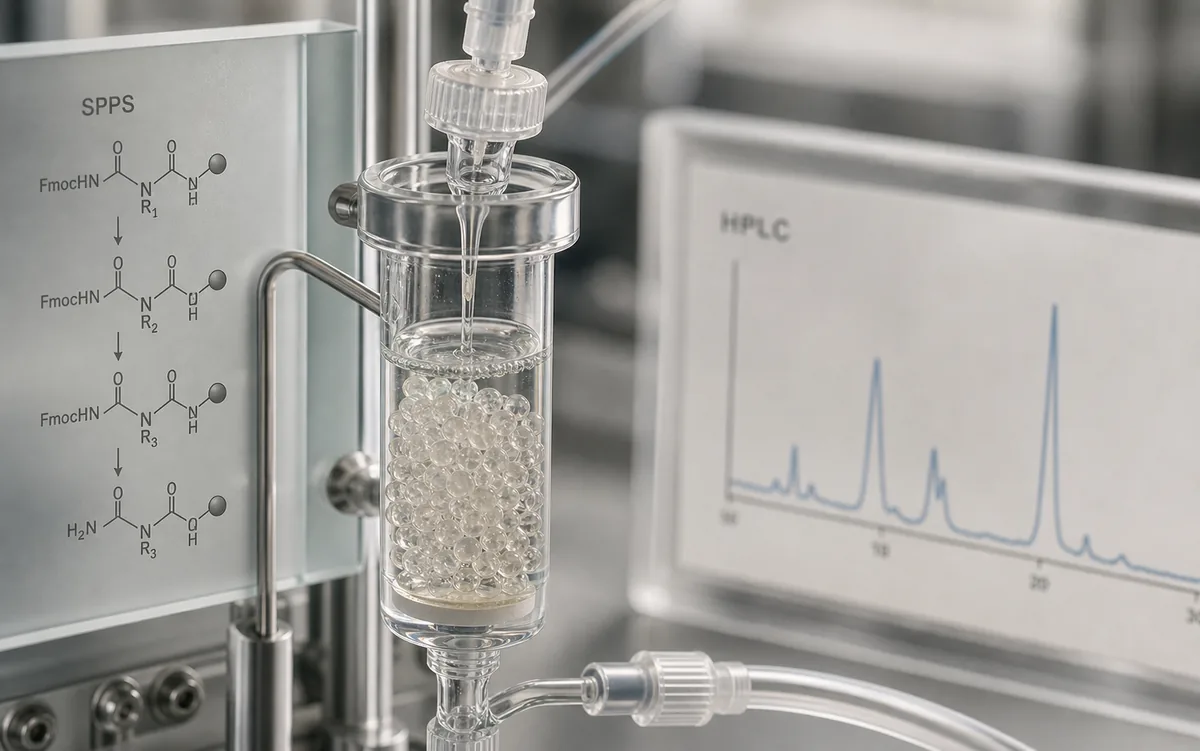
Solid-Phase Peptide Synthesis: How Research-Grade Peptides Are Actually Made
Solid-phase peptide synthesis is the chemistry behind every research peptide in the modern catalog: how the process works, why it governs purity, and how to read a synthesis report on a COA.
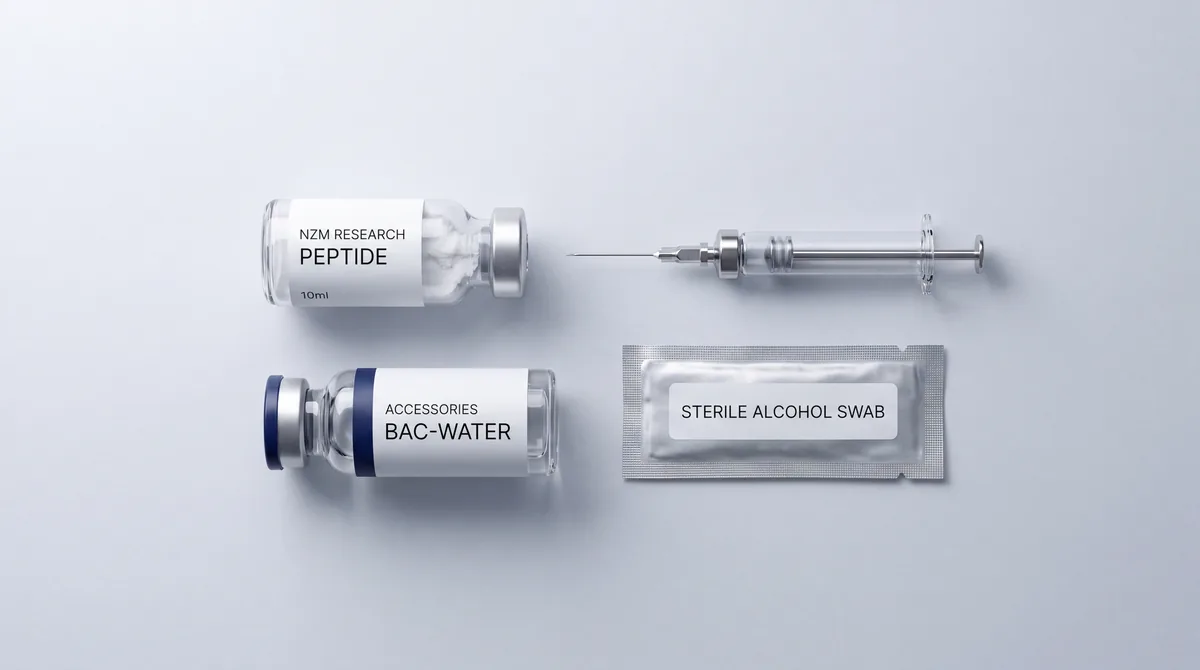
Reconstitution 101: How to Properly Prepare Lyophilized Peptides for Research
A practical lab-handling guide to reconstituting research-grade lyophilized peptides: choice of solvent, technique, post-reconstitution stability, and the operational mistakes that ruin protocol consistency.
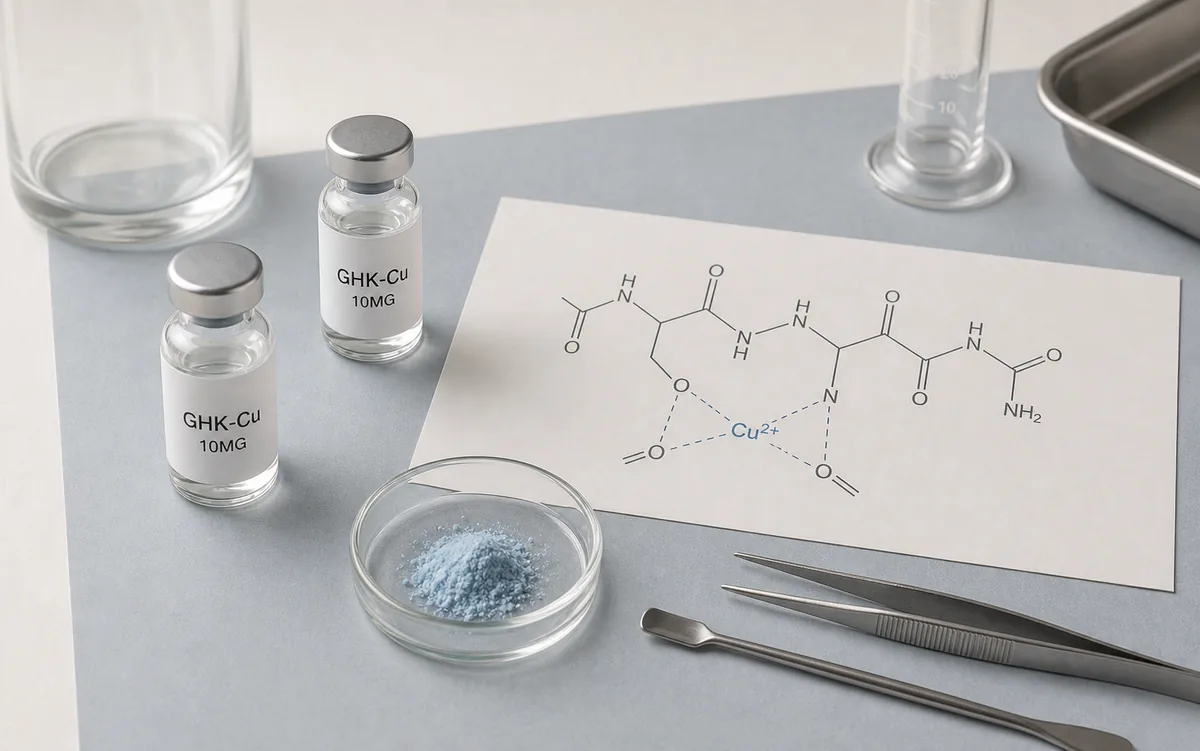
Copper Peptides: Chemistry, Mechanism, and Dermal-Research Applications
GHK-Cu is the most-cited copper peptide in dermal-research literature, but the wider class of tripeptide-copper complexes, including AHK-Cu, is what defines the category.